Will Raywood, author

  • Home
  • Books
    • Jamie Genius Writes a Novel
    • Trust Your Story
    • Natural Laws of Story
    • Extras
    • Free e-book
  • Newsletter
  • Blog
  • My Story
  • About
  • Privacy Policy

Why Gen‑AI Books Fail: 5 Reasons to Avoid the Hype and A Better Strategy

14 August 2026 by willraywood.com Leave a Comment

A new breed of “writer” now boasts they can crank out an entire book in under an hour with generative AI. Some even claim they’re pulling six figures selling these AI generated “masterpieces.” As a veteran writer who has bled for my craft, I decided to investigate. My conclusion is unambiguous: handing your career to a chatbot is the worst decision you can make.

Let me walk you through five reasons to avoid AI-generated books and show you a far better way to build a writing life that feeds both your creativity and your bank account.

Let’s start with the big one: AI‑generated text isn’t copyrightable. I’m no lawyer, but I’ve been writing and publishing long enough to tell you this: an AI‑generated book is not your creation, no matter how lovingly you sprinkle your “personal touch” over it.

Gen-AI output is public domain. Period. This isn’t writing; it’s the digital equivalent of copying Pride and Prejudice, changing a few character names, and slapping your own on the cover.

I can already hear the protest: “But how would anyone know?”

Sure, AI detectors are unreliable. And yes, copyright offices won’t scan your manuscript and shout, “Aha! Robot!” But here’s the part people conveniently ignore. Want to publish traditionally? Literary agents read thousands of submissions a year. You think they can’t smell a machine‑generated manuscript from the first page? Do you honestly believe they can’t tell the difference between a unique, compelling voice and the recycled prose churned out by a chatbot?

Even if you do manage to fool them—if you land a deal and they find out later—publishers will sue you for breaching your warranty of authorship.

Recently, a major publisher canceled a bestselling novel over suspected AI use. In the wake of that scandal, publishers are becoming more vigilant, especially when considering contracts for new writers. The scrutiny is increasing, and authors now face a very different landscape than they did even a year ago.

“Fine,” you say, “I’ll self‑publish.” Go ahead. Amazon’s KDP platform requires you to disclose AI-generated content.

“So what?” you counter. “They don’t publicly label AI books… yet.”

You’re gambling your entire career on that little word: yet. Author guilds and regulators are breathing down platforms’ necks, demanding transparency; the day mandatory labeling arrives, every AI‑generated title will be stamped second‑class.

The AI hustlers will tell you, “Readers won’t care if the book is good,” but here’s the truth: readers do care.

Take the now‑infamous New York Times article “The New Fabio Is Claude,” where a writer named Coral Hart bragged about self‑publishing over 200 romance novels in a single year using AI. I checked her Amazon and Goodreads pages and… oh boy. Read my article on this topic here. My point is, you cannot build a sustainable career with reviews that look like a crime scene.

Oh, I get it; the allure of cranking out an entire novel with gen-AI in a single day is hard to resist. But consider what that choice does to you as a creative person. The truth is simple: the only way to become a writer is to write. There’s no shortcut, no way around it. You become a writer by reading, studying, practicing, by wrestling with sentences and, over time, discovering your own voice.

AI sidesteps that entire journey. It’s like wanting to be a bodybuilder but letting a robot lift the weights for you. You never develop the muscle of storytelling. Instead of learning, you’re stagnating in a void of incompetence, forever dependent on the machine.

Take that shortcut, and you’re setting yourself up for inevitable imposter syndrome. You might hold a book with your name on it, but deep down, you’ll know it isn’t truly yours. Even praise will feel hollow, unearned. You’ll feel like a fraud, waiting for the moment everything unravels.

“But I don’t have time to write,” you might say. Here’s the good news: you don’t need AI to write faster, write well, or even build a six-figure income. Indie authors were publishing multiple novels a year even before AI. Writing quickly without sacrificing quality is a skill, one anyone can learn. It takes discipline, yes, but so does anything worth doing. Athletes don’t win Olympic gold training casually on weekends, and musicians don’t become virtuosos without thousands of hours of focused practice.
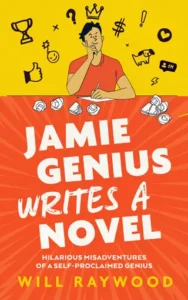
Jamie Genius Writes a Novel, a satirical novella by Will Raywood

You can build a writing career alongside a full-time job and a busy family life. Check out my articles about Stephen King’s routine and Brandon Sanderson’s drafting method. I share proven techniques to boost your productivity and help you finish books in months, even weeks. These will be your stories, your voice, authentic work that resonates emotionally with readers and sets you up for lasting success.

Still not convinced? If you want a hilarious glimpse of what happens when a would-be novelist outsources his magnum opus to AI, check out my novella Jamie Genius Writes a Novel.

Come for the comedy, stay for the cautionary tale.

So tell me, what’s your take on AI‑generated novels? I’d love to hear your thoughts in the comments.
Filed Under: Blog Tagged With: AI in publishing, AI writing, AI‑generated books, creative writing advice, generative AI, writing career, writing productivity

Can You Outline Like J.K. Rowling? Try My Simple 3‑Step Method

10 August 2026 by willraywood.com Leave a Comment

When I wrote my first novel, I had no idea how to plot. The result? I wasted months rewriting it, going in circles, fixing one problem only to create three more. When I discovered J.K. Rowling’s plot grid, it transformed how I outline my stories.

You know that sinking feeling you get halfway through a draft? The one where the ten brilliant subplots you dreamed up have twisted into a tangled, confusing mess? I’ve been there. J.K. Rowling was, too, until she developed a deceptively simple method that changed everything.

While some writers and theorists spend years searching for the “secret structure” behind great novels, I almost laughed when I first saw Rowling’s handwritten grid. It was so straightforward. But here’s what most people miss when they glance at that now-famous photograph:

Rowling’s secret isn’t the grid itself. It’s how she uses it.

She doesn’t just map the events of the story; she uses the grid to engineer emotional momentum.

Sure, creating a plot grid takes work. It might even look intimidating at first. But trust me, the work you put in upfront will save you months of painful rewrites. This tool helps you write faster, guiding you to a finished draft in weeks instead of months, all while ensuring your story hits every emotional beat.

It’s a double win!

Before we dive in, let’s tackle the fundamental question. Do you even need to outline your story? Can’t you just write by following inspiration wherever it leads? After all, famous writers like Stephen King and George R. R. Martin prove you can find massive success without a detailed plot.

The good news is that Rowling’s technique works for both approaches. Plotters devise a detailed outline before they start drafting. For them, the grid is a blueprint. Discovery writers can do what’s called reverse outlining. After finishing a draft, they create an outline from the existing text. This helps them see the story’s structure at a glance, find plot holes, and ensure every thread makes sense.

A Long History of Visual Outlining

The idea of structuring a story with a visual map is nothing new. Great writers have been doing it for ages. Vladimir Nabokov wrote Lolita on index cards. While traveling across the United States with his wife to study butterflies, he filled out cards for individual scenes and shuffled them daily, exploring different narrative possibilities.

William Faulkner covered the walls of his study with pages outlining the plots of his novels.

Joseph Heller created large charts while writing Catch-22 to track character appearances and timelines in his famously nonlinear story.

Modern novelists and screenwriters use everything from corkboards to spreadsheet trackers, all of which serve the same function as Rowling’s grid. Now, let’s see how you can turn this tool into your storytelling superpower.

Step One: Build the Story Grid

At its core, Rowling’s plot grid is a simple story matrix. Across the top, she listed chapters or time segments. Down the left side, she listed different story threads.

Start by creating a simple table. For the columns, I recommend starting with broad story sections rather than individual chapters. Think in terms of five acts or the main story beats: Setup, Rising Action, Crisis, Climax, and Resolution.

For the rows, list your key story elements. Your initial grid might look something like this:

  • Setting: Where and when does the story take place? (Especially useful if characters travel).
  • Protagonist’s Arc: The core emotional journey of your hero.
  • Main Themes: The underlying ideas you want to explore.
  • Main Plot: The primary sequence of events.
  • Subplot A, Subplot B, etc.: Secondary storylines.

As you fill this out, your goal is to get a bird’s-eye view of your story. The immediate benefits are obvious:

  • See the whole story at a glance, making it easy to spot plot holes.
  • Track multiple plotlines to ensure they are properly set up and resolved.
  • Plan your foreshadowing and payoffs with intention.
  • Control your pacing and maintain narrative momentum.
  • Experiment with structure by rearranging scenes without losing the big picture.

These are great, but they’re just surface-level benefits. If readers don’t care about your story, the most perfect plot in the world won’t save it. The magic begins when we focus on emotion.


Want to master the art of emotional storytelling? Subscribe to my free newsletter for exclusive insights into the art and science of narrative. You’ll get a fascinating e-book as a welcome gift!

Newsletter

Step Two: Map the Character’s Emotional Journey

Science shows that engaging stories trigger a cascade of neurochemicals in our brains: dopamine, oxytocin, cortisol, and endorphins. Our brains are wired to respond to narrative. Falling in love with a story is like falling in love with a person; the logical part of our mind takes a back seat, and we get to bask in that neurochemically induced bliss.

This is how you hook readers for life.

The key is understanding one simple truth: what matters isn’t the events of the story, but how those events affect the characters and, by extension, the audience. If a story is about a girl and her puppy, then that puppy becomes the most important thing in the universe. What happens to the puppy—and how the girl reacts—matters more than any broader event. There may be a revolution, a war, a natural disaster, or even an AI takeover or alien invasion. But to make the story compelling, the author must filter every event through the character’s emotional experience.

The hidden power of the plot grid is its ability to map this experience. Don’t just use it as a checklist for plot points. For every event, ask: how does this change the character?

Let’s look at Harry Potter and the Philosopher’s Stone:

  • Plot Event: Harry receives a mysterious letter from Hogwarts.
  • Emotional Impact: Before this, Harry felt neglected and invisible. The letter’s arrival changes everything. More than a plot point, it’s the moment Harry first dares to hope that he might belong somewhere. That feeling becomes the emotional engine that pulls the reader into the story.

Stories are always about characters and their journeys. The distinction between “plot-driven” and “character-driven” stories is misleading. Characters react to the events of the plot, but their reactions, in turn, influence the plot’s direction.

To prove it, try a thought experiment. Take a supposedly plot-driven classic The Count of Monte Cristo, where Edmond Dantès escapes prison, finds a treasure, and seeks revenge. Now, replace him with Jean Valjean from Les Misérables. Would the plot unfold the same way? Of course not. Valjean would likely use the treasure to help the poor and seek justice, not vengeance.

So, both plot and characters are equally important in moving the story forward.

In Step 2, add a row called “Protagonist’s Emotional State” to your grid. Here, you’ll map how their feelings change in response to the plot. An emotional progression could look like:

Hope → Doubt → Despair → Resilience → Triumph

This ensures your story isn’t just a sequence of “what happens next,” but a meaningful journey of inner change.

Step Three: Create a Detailed Story Outline

Now that you have your big picture framework, you can zoom in. Add a column for every chapter of your book. Don’t worry if you don’t know the final chapter count; you can always adjust this later.

As you populate each cell, make sure every chapter is doing its job. Ask yourself:

  • What is the character feeling now?
  • What changes emotionally in this scene?
  • What belief about themselves or the world is being challenged?

If several chapters go by with your protagonist feeling the same way, the story can feel emotionally stagnant, even if dramatic things are happening on the surface. This “emotional flatness” is a main reason readers disengage.

To avoid this, weave your main themes into the plot and the character arc. The best storytellers integrate these so seamlessly that the reader feels the theme’s power without consciously recognizing it until a climactic moment of clarity. For example, in Harry Potter and the Philosopher’s Stone, the theme of love and sacrifice permeates the entire story. Harry’s mother, Lily Potter, sacrifices herself to save him from Lord Voldemort. That act of love becomes the force that not only protects Harry but shapes his entire journey.

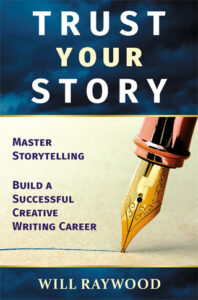
Book cover: Trust Your Story: Master Storytelling and Build a Successful Creative Writing Career by Will Raywood

I know that creating a detailed outline can feel daunting, but it can also be very fun and empowering. It’s a living document, a tool meant to help, not constrain you. Go back and tweak it whenever inspiration strikes.

Ready to take your writing career to the next level? If you want to create unforgettable characters and stories readers will cherish, check out this book: Trust Your Story. It’s a comprehensive guide covering everything from core storytelling techniques to devising a winning author strategy.

So, what are your thoughts? Have you tried Rowling’s plot grid or similar methods? I’m curious to hear what works for you. Leave a comment below!

Filed Under: Creative Writing Tagged With: creative writing advice, first draft tips, JK Rowling, novel outlining, science of storytelling, story plot, writing productivity

The Sanderson System: 7 Steps to Writing a Blockbuster Novel

5 August 2026 by willraywood.com Leave a Comment

I used to consider myself a slow writer. Whenever I heard about authors who finish their novels in less than a month, I was skeptical. Surely such a feat requires exceptional skill… and maybe a few sleepless nights. Not for me, thanks very much.

I’m no writing machine, I told myself. I need inspiration. I need time to mature my story outline, find my characters’ voices, and redraft the first chapter a dozen times for good measure.

Yet, as an experiment, I applied the writing method I’m about to present and… to my surprise, it worked. Instead of a full year, I drafted a novel in just a few weeks. And you know what? The book turned out quite well. It garnered good reviews and sold decently.

Any author can learn to write faster with the right techniques. In fact, drafting quickly can improve your story and your prose, for reasons I explain in my article about Stephen King’s routine. Give it a read.

But this post is about another author, a highly successful one: Brandon Sanderson. Whatever one might think of his books, we can’t deny their popular appeal. In 2023, he raised a record‑breaking $41.7 million on Kickstarter for four new novels. Some readers pledged hundreds of dollars for a single campaign.

George R. R. Martin divides writers into two camps: architects, who design an outline before drafting, and gardeners, who plant the seed of a story and discover its shape as it grows. Sanderson outlines extensively.

I’m (usually) an architect. I’ve found that the best way to get the kinds of endings I like, I have to know where I’m going before I start.

He needs to know the story’s conclusion before drafting. He admits, “I write for endings.” His outlines are engineered so every plotline converges toward a single climactic moment. He dislikes rewriting and wants his first draft to be as close to final as possible, in contrast to discovery writers like Martin or King, who revise heavily.

That said, Sanderson balances planning with improvisation through what he calls a “floating outline.” His “Points on the Map” philosophy gives him enough structure to avoid getting lost, yet enough freedom to invent along the way. I analyzed his method and broke his process into seven steps.

Step 1. Imagine major scenes

Once you have a story idea, visualize the big moments, like emotional climaxes, plot turns, major character revelations. Some writers start with themes; others begin with the mood and core emotions of their story‑in‑the‑making. Either way is fine. Use whatever method drives your imagination.

These major scenes become the “points” your story must reach. To ensure your story engages your audience, define the main conflict as early as possible. It can be external, like an existential threat or a major challenge for the protagonist, internal, or both.

Sanderson does his worldbuilding before drafting, and that’s a wise approach. Drafting and worldbuilding at the same time will slow you down. You don’t need a full compendium before writing, just enough information about the key elements, like the main conflict and character arcs. The world exists to support the narrative, so resist the temptation to invest too much time in aspects that won’t matter to the plot.

Step 2. Divide the book into broad parts

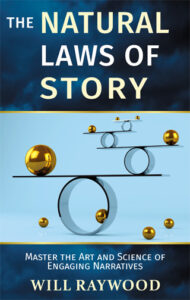
Book cover: The Natural Laws of Story: Master the Art and Science of Engaging Narratives by Will Raywood

Some writers prefer the three‑act structure; others lean toward its five‑act cousin, the Hero’s Journey, or different frameworks entirely. This technique works regardless of the number of acts. Think of your plot as a living organism and don’t force it into a rigid template just to follow convention. You might end up with three acts, four, or even six. Don’t worry about the number at the start, you can adjust later as your outline develops.

Regardless of structure, every story needs a few essential elements: setup, inciting incident, rising action, crisis, climax, and resolution. You can add optional beats like a midpoint, falling action, or denouement. But your first task is to visualize the overall shape of your story and identify its key turning points, the moments that define the emotional arc.

For more details on story structure and outlining methods, check out my guide The Natural Laws of Story. You’ll find plenty of examples from famous works and exercises to help you practice.

Step 3. Map out the scenes into an outline

The order of your scenes and where they fall in the novel matters. You want to create an addictive experience for your readers, where every setup leads to a buildup and resolves with a satisfying payoff. Your most dramatic scene should be the climax, usually toward the end of the story, in the final act.

Make sure all your scenes follow a logical progression. One proven method is to raise the stakes progressively. Each act ends with its own climax, a moment of heightened dramatic intensity that leads naturally into the next act, where the stakes escalate again.


Subscribe for my newsletter for exclusive insights into the art and science of narrative and receive a free e-book as a welcome gift!

Newsletter

Step 4. Build bullet‑point lists for each story beat

These bullet points include:

  • Plot steps that must happen beforehand
  • Character progression beats
  • Foreshadowing or mystery‑setup beats

These points are reminders, not commandments. They exist to keep you oriented, not to constrain you. Your outline is a living structure meant to evolve as you develop it and draft your manuscript.

The early acts of your book will usually have more bullet points than the later ones. That’s normal. Even if you’re an architect, you should leave yourself and your characters room for discovery and exploration. As you draft, revisit your outline regularly and add new bullet points.

These new points help you map out subplots, secondary character arcs, and—importantly—build connections between all the elements of your story.

Step 5. Outline every chapter before drafting

This step is optional, but it will dramatically speed up your drafting. Truly. It’s the difference between writing a novel in three months and writing one in a single month. The secret? Granular outlining.

The fastest, most productive writers outline not only every act but every chapter. Each chapter is a mini‑story with its own setup, conflict, rising action, and climax. Outline each chapter with a few bullet points, just as you did for the acts in the previous steps. These points will act as road posts and guide you during drafting.


If you’d like to support my work and see more articles and videos like this, check out my books, for example the story about a disastrously misguided debut novelist.

Come for the comedy, stay for the cautionary tale!


Step 6. The ending grows more powerful during drafting

Everything you do should contribute to building dramatic tension that releases during the climax. Even if you had a strong ending in mind back in Step 1, you can always strengthen it while drafting.

Imagine the plot as an elastic band, the band representing the tension and suspense in your story. As the narrative progresses and conflicts intensify, the elastic stretches further. The audience becomes more invested, anticipating the release of that tension. The climax is the moment when the band reaches its limit and snaps back. This release provides a powerful emotional payoff as the tension built throughout the story resolves. The snap mirrors the falling action and resolution that follow, as the characters and narrative return to equilibrium.

Step 7. Revise the manuscript

Like many writers, I used to dread revisions. Now I enjoy them. This is where you turn a rough diamond into something that shines… or at least something you’re not embarrassed to share.

Every writer develops their own revision method. It’s a topic I discuss in other posts, so I’ll be brief here. If you’ve followed all the previous steps, you already have a functioning structure, so revisions focus more on pacing, style, and polish rather than fixing character arcs or rebuilding the plot from scratch.

If you’ve done your job well, you don’t need to “kill your darlings.” No grim task required. That famous advice applies mostly to discovery writers like Stephen King, or gardeners, as GRRM calls them.

But what do you do if you find plot holes? Well, that topic deserves its own article. Stay tuned, and don’t forget to subscribe to my newsletter so you never miss important updates.

Newsletter

Filed Under: Creative Writing Tagged With: Brandon Sanderson, creative writing advice, first draft tips, novel outlining, plotters vs pantsers, Stephen King, story plot, writing productivity

Plot Is Overrated? Lee Child’s Claim and the 4Ps Storytelling Method Explained

6 July 2026 by willraywood.com Leave a Comment

In a BBC interview, bestselling author Lee Child makes a shocking claim: plot is overrated. That goes against everything writers are taught: the three‑act structure, the five‑act structure, Save the Cat, every plotting formula out there. When I first heard it, I felt liberated. I’ve been saying this for years: you don’t need to reinvent the wheel. You can tell an original, powerful story using a conventional plot. But if the plot doesn’t matter, what does?

In this video, I unpack what Lee Child means and introduce you to the 4P Method, a fast, simple, and highly effective way to outline stories that grip your readers.

Lee Child’s Claim: Plot Is Overrated

So, what exactly is Child arguing? His point is: there are only a handful of plot structures that work, and you can’t invent a new one. As an example, he notes that the ancient myth of Theseus and the Minotaur provides the template for countless modern thrillers and spy stories, including Ian Fleming’s Dr. No. Child compares plot to a rental car, something you borrow for your story. It doesn’t need to be fancy; it just needs to get you where you want to go.

But here’s the problem… plot is important. Research in psychology and neuroscience confirms what storytellers have known since Aristotle. Narrative structure (the shape of the story) is essential for reader engagement. It pulls readers into the characters’ world and makes them care about what happens next.

Before we go further, let’s clarify what “plot” means, because story and plot are not the same thing. Russian Formalists introduced the distinction between story (fabula) and discourse (syuzhet), terms later developed by narratologists. The fabula is the chronological sequence of events as they supposedly happened. The discourse (what we call the plot) is how the narrator presents those events.

A great example is the pilot episode of Breaking Bad, which hooks the viewer by opening with the climax. We see a middle‑aged man in a bullet‑riddled RV, panicked and pantless, speeding down a desert road. We’re instantly asking: How did he end up here? Only then does the plot rewind to Walter White’s ordinary life as a schoolteacher.

If the story goes A → B → C, the plot might go B → A → C.

Would you say the plot is unimportant? Aristotle certainly didn’t. In Poetics, he considered plot the most important element of a story.

So yes, plot is crucial. But here’s the catch: you shouldn’t start your planning with the plot. First, you need to understand what your story is — its emotional core, its central truth — and only then decide how to tell it.


Want to master the art of emotional storytelling? Subscribe to my free newsletter for exclusive insights into the art and science of narrative. You’ll get a fascinating e-book as a welcome gift!

Newsletter

I’ve analyzed hundreds of successful books and developed a simple, fast, and highly effective method for outlining a novel. It begins with four essential questions: Where? Why? Who? How? I call it the 4Ps Storytelling Method: Place, Purpose, Protagonist, and Plot.

Place: Establishing the Story’s World

In Stage 1, choose the type of story you want to tell and the world in which it unfolds. This is the protagonist’s familiar environment, the baseline from which everything begins. “Place” goes beyond geography, as it defines the cultural framework of the story and sets the audience’s expectations.

A contemporary novel implies a present‑day setting. A heroic fantasy suggests an invented realm with its own gods, customs, and magic systems.

Breaking Bad is set in Albuquerque, New Mexico, a perfect backdrop for a story centered on large‑scale drug trafficking. The setting isn’t decorative; it shapes the story’s logic.

Purpose: Defining the Emotional Core

In Stage 2, outline the main theme, idea, or emotional core of your story. This is the second P: Purpose, the red thread that binds every element into a cohesive whole.

Creative brilliance is hard to define, but we recognize it instantly. It doesn’t come from rigid rule‑following; it comes from clarity of vision. In exceptional works, every component serves a deliberate purpose, and the whole becomes greater than the sum of its parts.

Ask yourself:

  • Why are you writing this story?
  • Why does it matter to you?
  • Why will it matter to your audience?
  • What emotions, ideas, or personal experiences do you want to express?

Don’t skip this step. A clear artistic vision will guide your plot decisions and help you shape meaningful character arcs.

Protagonist: Choosing the Right Character

In Stage 3, define your main character: their motivations, desires, and the obstacles standing in their way. This is the third P: Protagonist. You need the right protagonist for your story, someone who embodies the themes and conflicts you want to explore.

The story arc in Breaking Bad shares striking similarities with Crime and Punishment. Both Walter White and Rodion Raskolnikov are intelligent men wrestling with darker impulses. Both commit crimes out of desperation. Walter cooks meth to secure his family’s future after a cancer diagnosis. Raskolnikov murders a pawnbroker to escape poverty and test his belief that extraordinary individuals can transcend moral law.

Both see themselves as superior, entitled to break boundaries. And in both stories, we witness their descent as they become trapped in the consequences of their choices.

Jack Reacher is another compelling example, the character who propelled Lee Child to global success. A former major in the U.S. Army Military Police, Reacher is now a drifter, a modern knight‑errant roaming America. He’s mythic yet grounded, always an outsider, always guided by a strict moral code. He perfectly embodies Child’s recurring themes, especially the “one man vs. the system” dynamic.

Plot: Designing the Story’s Architecture

Now we reach the final P. In Stage 4, outline the fabula (the chronological story) and the plot (the order in which events are revealed). You don’t need a detailed outline yet, just a blueprint. You can reuse an existing plot formula, but only if it serves your story.

Lee Child often reuses the same structure because it aligns with his intentions. Jack Reacher arrives in a corrupt town, uncovers a conspiracy involving a vulnerable victim and a powerful antagonist, investigates, exposes the truth, and dismantles the corrupt system. Reacher’s drifter lifestyle makes this endlessly repeatable.

Book cover: The Natural Laws of Story: Master the Art and Science of Engaging Narratives by Will Raywood

But what works for Child won’t necessarily work for you. Contrary to popular belief, there is no perfect plot structure. Your plot must serve the needs of your narrative and work in synergy with all other story elements.

Think of your plot as a living organism. Don’t force it into a rigid template just to follow convention. You might end up with three acts, four, or even six. Don’t worry about the number at the start, you can adjust later as your outline develops.

Regardless of structure, every story needs a few essential elements: setup, inciting incident, rising action, crisis, climax, and resolution. You can add optional beats like a midpoint, falling action, or denouement. But your first task is to visualize the overall shape of your story and identify its key turning points, the moments that define the emotional arc.

You can find the full breakdown of the 4Ps Method in my guide The Natural Laws of Story. It also includes a Story Arc Development Worksheet to help you apply the method to your stories. Check it out!

Conclusion: What Really Matters in a Great Story

In the end, what matters is the synergy between all the elements of your story. Choose the plot that best serves your intent, your emotional core, and your artistic vision. And do yourself and your readers a favor: don’t obsess over plot formulas. Use structure as a tool, not a cage. Let your story breathe, and let your choices be guided by meaning, not by templates.

So, what’s your take? Do you agree with Lee Child that plot is overrated, or do you believe originality in plot still matters? Share your thoughts in the comments.

Filed Under: Creative Writing Tagged With: creative writing advice, first draft tips, Lee Child, story arc, story plot, writing productivity

Forget AI: Stephen King’s routine is what you need to write a novel fast

11 June 2026 by willraywood.com 1 Comment

It took me three years to write my first novel, and it wasn’t even good. Then I tried Stephen King’s famously productive routine, and it changed everything. King has written more than 60 novels and novellas, plus over 200 short stories. While most published authors write one book a year, he writes a full novel in about three months.

What’s his secret? I followed the advice he outlines in On Writing: A Memoir of the Craft, and what I discovered may surprise you. Here’s my four-step plan to finish a novel in under three months.

Step One: Start With a Strong Premise

First, you need an idea for your book. The good news is that you don’t need a fully formed story to start writing. King begins with a situation. He asks, “What if?” What if a high school girl had telekinetic powers? (Carrie). What if a writer were held captive by his “number one fan”? (Misery).

When it comes to the writing process, there are two broad types of writers: plotters and discovery writers, also known as pantsers. Plotters develop a detailed plan before drafting. They know their characters’ backstories, goals, and secrets, and they understand how the story will unfold and resolve.

King belongs to the discovery writers. He doesn’t plan his stories in detail. Instead, he trusts his instincts and improvises as events unfold, following the story wherever it leads. He writes,

Plot is […] the good writer’s last resort and the dullard’s first choice.

Many debut writers feel stuck because they believe they need a groundbreaking idea, an original theme, and a detailed outline before they can even begin. King argues the opposite. Clarity comes during the writing process, not before it. For him, writing isn’t the reward for having a good idea; it’s the method by which good ideas are discovered.

Even if you’re a plotter, you can still use King’s routine. In fact, plotters can often write novels even faster than three months. I’ve done it myself, no AI needed, but that’s a topic for another video.

Step Two: Learn to Write Well… and Fast

Once you have a story idea, the next stage is the most important one: write the first draft without interruption.

King writes six pages every day, roughly 2000 words. That may sound like a lot, but it’s entirely doable, even with a full-time job and a busy family life. You need two things: the ability to write fast and a routine you can sustain for several weeks.

Some writers believe that writing fast means sacrificing quality. In fiction, the opposite is often true. Writing quickly can produce prose that feels more spontaneous and alive. Many famous works were written in bursts of creative energy. Robert Louis Stevenson wrote The Strange Case of Dr. Jekyll and Mr. Hyde in just a few days. Ray Bradbury wrote Fahrenheit 451 in nine days. Stephen King himself drafted The Running Man in a single week.

The surprising part is that anyone can learn to write faster. When I started, I struggled to write 200 words an hour. With practice, that number steadily increased. Many writers produce 500 to 1000 words an hour, and with certain techniques, even more. If you can write 1000 words an hour, you only need a couple of hours a day to hit that six-page goal.

One powerful technique is freewriting, which has been around for almost a century and used by many great writers. Try this: choose a topic you care about and write as fast as you can for two minutes without stopping. Don’t worry about grammar or sentence structure. Don’t analyze. Just keep writing whatever comes to mind.

You may be surprised to discover that your true feelings about the topic differ from what you thought. Freewriting bypasses the conscious mind and reveals deeper truths beneath the surface. This is a key part of discovery writing.

Writing fast can feel incredibly liberating. Don’t worry if the results are rough or even nonsensical. You’ll revise them later, in step four. During drafting, your only goal is to give voice to your characters and explore their deepest fears, desires, and anxieties.

Step Three: Build a Daily Writing Routine

The next step is to create a routine that allows you to write every day without interruptions. King writes in a kind of self-hypnosis, what psychologists call a flow state, where the outside world fades away and you’re fully immersed in the work.

To reach that state, you need a dedicated workspace where you won’t be disturbed. Turn everything off: your phone, email notifications, TV, everything. Clear your desk of distractions, keeping only some water or your favorite drink. King writes with the door closed to shut out the world.

Once you start, don’t stop unless there’s an emergency. If you get stuck on a scene, leave a placeholder and keep writing.

Sound matters, too. King often listens to music while writing or revising. Whether you write with music or in silence is up to you, but if you do use music, make sure it matches the mood of your story. King prefers energetic rock and metal, which suit his style and pace.

The time of day also matters. Set a non-negotiable writing slot. King writes from 8 a.m. to noon, but other authors choose times that fit their lives. Toni Morrison woke at 4 a.m. to write while raising two children. I’ve known writers who worked from 5 to 7 every morning without fail. Night owls may prefer late evenings; writers like Marcel Proust and Franz Kafka worked through the night.

In short, a full-time job, family responsibilities, and a social life are not insurmountable obstacles for motivated writers. If you write at least 1000 words a day, finishing the first draft in three months is entirely realistic.


Ever wondered how some bestselling authors write a full novel in less than a month? Yes, just one month, from the first spark of an idea to a publishable manuscript. It’s not talent or luck.

Subscribe for my newsletter to learn the exact techniques and receive a free e-book as a welcome gift.


Step Four: Revise Your Manuscript

Congratulations! You’ve written the final sentence of the last chapter. But the journey isn’t over yet. King recommends taking a six-week break before revising, though for some writers a week or two is enough. Distance helps you return to the manuscript with fresh eyes.

Like many writers, I used to dread revisions. Now I enjoy them. This is where you turn a rough diamond into something that shines… or at least something you’re not embarrassed to share.

When revising, ask yourself what the story is really about. What’s the core emotion beneath the surface? In Carrie, it’s humiliation and rage born from bullying. In Misery, it’s the fear of losing creative freedom. In It, it’s the childhood trauma we carry into adulthood.

Do you see a theme or a common thread emerging? Does your manuscript truly serve it? Cut anything that distracts from the story, including unnecessary characters, long exposition, and even entire subplots. This is where King’s advice “kill your darlings” comes in. For him, the final manuscript is the first draft minus ten percent.

He recommends multiple self-editing passes, each focused on a specific aspect such as structure, character, or style. First drafts are supposed to be messy. Rewrite awkward sentences. Keep descriptions tight. As King puts it,

Description begins in the writer’s imagination, but should finish in the reader’s.

Here’s a passage from Doctor Sleep:

Danny left the little room next to his mother’s and crossed the hall. The wind gusted and a dying palm tree beside the building clattered its leaves. The sound was skeletal.

Notice how he uses precise but minimal details. Words like “dying” and “skeletal” deliver emotional impact and set the mood. King is skeptical of adverbs, saying that “the road to hell is paved with adverbs.” He wouldn’t write “the wind gusted sharply,” because “sharply” adds nothing. He wouldn’t write “the boy walked quickly,” but instead chose verbs like hurried, trotted, or darted—more concrete and visual choices.

He also favors active voice. “John gave a rose to Jane” feels more natural than “Jane was given a rose by John,” because we first see the action, then its recipient.

These aren’t rigid rules. Adverbs and passive voice can be effective when used deliberately. Whatever makes your writing more concise and vivid also makes it more engaging.

Book cover: The Natural Laws of Story: Master the Art and Science of Engaging Narratives by Will Raywood

My Own Method for Building Strong Story Arcs: The 4Ps Method

If you follow King’s advice closely, you’ll draft your novel in under three months, take a six-week break, and spend another six weeks revising. I managed to complete my manuscript from start to finish in less than three months.

I’m neither a strict plotter nor a pure discovery writer; I developed my own method for building a strong story arc, which I explain in detail in a recently published writing guide: The Natural Laws of Story. Check it out!

Have you tried Stephen King’s routine? I’d love to hear your thoughts. Leave a comment below!

Filed Under: Creative Writing Tagged With: creative writing advice, discovery writing, first draft tips, how to revise a novel, how to write a novel fast, plotters vs pantsers, Stephen King, story ideas, writing career, writing productivity, writing routine

FOLLOW ME

Newsletter | Goodreads | YouTube

Copyright Will Raywood, 2025

Copyright © 2026 · Agency Pro on Genesis Framework · WordPress · Log in