Will Raywood, author

  • Home
  • Books
    • Jamie Genius Writes a Novel
    • Trust Your Story
    • Natural Laws of Story
    • Extras
    • Free e-book
  • Newsletter
  • Blog
  • My Story
  • About
  • Privacy Policy

Plot Is Overrated? Lee Child’s Claim and the 4Ps Storytelling Method Explained

6 July 2026 by willraywood.com Leave a Comment

In a BBC interview, bestselling author Lee Child makes a shocking claim: plot is overrated. That goes against everything writers are taught: the three‑act structure, the five‑act structure, Save the Cat, every plotting formula out there. When I first heard it, I felt liberated. I’ve been saying this for years: you don’t need to reinvent the wheel. You can tell an original, powerful story using a conventional plot. But if the plot doesn’t matter, what does?

In this video, I unpack what Lee Child means and introduce you to the 4P Method, a fast, simple, and highly effective way to outline stories that grip your readers.

Lee Child’s Claim: Plot Is Overrated

So, what exactly is Child arguing? His point is: there are only a handful of plot structures that work, and you can’t invent a new one. As an example, he notes that the ancient myth of Theseus and the Minotaur provides the template for countless modern thrillers and spy stories, including Ian Fleming’s Dr. No. Child compares plot to a rental car, something you borrow for your story. It doesn’t need to be fancy; it just needs to get you where you want to go.

But here’s the problem… plot is important. Research in psychology and neuroscience confirms what storytellers have known since Aristotle. Narrative structure (the shape of the story) is essential for reader engagement. It pulls readers into the characters’ world and makes them care about what happens next.

Before we go further, let’s clarify what “plot” means, because story and plot are not the same thing. Russian Formalists introduced the distinction between story (fabula) and discourse (syuzhet), terms later developed by narratologists. The fabula is the chronological sequence of events as they supposedly happened. The discourse (what we call the plot) is how the narrator presents those events.

A great example is the pilot episode of Breaking Bad, which hooks the viewer by opening with the climax. We see a middle‑aged man in a bullet‑riddled RV, panicked and pantless, speeding down a desert road. We’re instantly asking: How did he end up here? Only then does the plot rewind to Walter White’s ordinary life as a schoolteacher.

If the story goes A → B → C, the plot might go B → A → C.

Would you say the plot is unimportant? Aristotle certainly didn’t. In Poetics, he considered plot the most important element of a story.

So yes, plot is crucial. But here’s the catch: you shouldn’t start your planning with the plot. First, you need to understand what your story is — its emotional core, its central truth — and only then decide how to tell it.


Want to master the art of emotional storytelling? Subscribe to my free newsletter for exclusive insights into the art and science of narrative. You’ll get a fascinating e-book as a welcome gift!

Newsletter

I’ve analyzed hundreds of successful books and developed a simple, fast, and highly effective method for outlining a novel. It begins with four essential questions: Where? Why? Who? How? I call it the 4Ps Storytelling Method: Place, Purpose, Protagonist, and Plot.

Place: Establishing the Story’s World

In Stage 1, choose the type of story you want to tell and the world in which it unfolds. This is the protagonist’s familiar environment, the baseline from which everything begins. “Place” goes beyond geography, as it defines the cultural framework of the story and sets the audience’s expectations.

A contemporary novel implies a present‑day setting. A heroic fantasy suggests an invented realm with its own gods, customs, and magic systems.

Breaking Bad is set in Albuquerque, New Mexico, a perfect backdrop for a story centered on large‑scale drug trafficking. The setting isn’t decorative; it shapes the story’s logic.

Purpose: Defining the Emotional Core

In Stage 2, outline the main theme, idea, or emotional core of your story. This is the second P: Purpose, the red thread that binds every element into a cohesive whole.

Creative brilliance is hard to define, but we recognize it instantly. It doesn’t come from rigid rule‑following; it comes from clarity of vision. In exceptional works, every component serves a deliberate purpose, and the whole becomes greater than the sum of its parts.

Ask yourself:

  • Why are you writing this story?
  • Why does it matter to you?
  • Why will it matter to your audience?
  • What emotions, ideas, or personal experiences do you want to express?

Don’t skip this step. A clear artistic vision will guide your plot decisions and help you shape meaningful character arcs.

Protagonist: Choosing the Right Character

In Stage 3, define your main character: their motivations, desires, and the obstacles standing in their way. This is the third P: Protagonist. You need the right protagonist for your story, someone who embodies the themes and conflicts you want to explore.

The story arc in Breaking Bad shares striking similarities with Crime and Punishment. Both Walter White and Rodion Raskolnikov are intelligent men wrestling with darker impulses. Both commit crimes out of desperation. Walter cooks meth to secure his family’s future after a cancer diagnosis. Raskolnikov murders a pawnbroker to escape poverty and test his belief that extraordinary individuals can transcend moral law.

Both see themselves as superior, entitled to break boundaries. And in both stories, we witness their descent as they become trapped in the consequences of their choices.

Jack Reacher is another compelling example, the character who propelled Lee Child to global success. A former major in the U.S. Army Military Police, Reacher is now a drifter, a modern knight‑errant roaming America. He’s mythic yet grounded, always an outsider, always guided by a strict moral code. He perfectly embodies Child’s recurring themes, especially the “one man vs. the system” dynamic.

Plot: Designing the Story’s Architecture

Now we reach the final P. In Stage 4, outline the fabula (the chronological story) and the plot (the order in which events are revealed). You don’t need a detailed outline yet, just a blueprint. You can reuse an existing plot formula, but only if it serves your story.

Lee Child often reuses the same structure because it aligns with his intentions. Jack Reacher arrives in a corrupt town, uncovers a conspiracy involving a vulnerable victim and a powerful antagonist, investigates, exposes the truth, and dismantles the corrupt system. Reacher’s drifter lifestyle makes this endlessly repeatable.

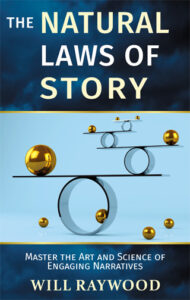
Book cover: The Natural Laws of Story: Master the Art and Science of Engaging Narratives by Will Raywood

But what works for Child won’t necessarily work for you. Contrary to popular belief, there is no perfect plot structure. Your plot must serve the needs of your narrative and work in synergy with all other story elements.

Think of your plot as a living organism. Don’t force it into a rigid template just to follow convention. You might end up with three acts, four, or even six. Don’t worry about the number at the start, you can adjust later as your outline develops.

Regardless of structure, every story needs a few essential elements: setup, inciting incident, rising action, crisis, climax, and resolution. You can add optional beats like a midpoint, falling action, or denouement. But your first task is to visualize the overall shape of your story and identify its key turning points, the moments that define the emotional arc.

You can find the full breakdown of the 4Ps Method in my guide The Natural Laws of Story. It also includes a Story Arc Development Worksheet to help you apply the method to your stories. Check it out!

Conclusion: What Really Matters in a Great Story

In the end, what matters is the synergy between all the elements of your story. Choose the plot that best serves your intent, your emotional core, and your artistic vision. And do yourself and your readers a favor: don’t obsess over plot formulas. Use structure as a tool, not a cage. Let your story breathe, and let your choices be guided by meaning, not by templates.

So, what’s your take? Do you agree with Lee Child that plot is overrated, or do you believe originality in plot still matters? Share your thoughts in the comments.

Filed Under: Blog Tagged With: creative writing advice, first draft tips, Lee Child, story arc, story plot, writing productivity

The Hidden Methods Behind Bestselling Book Ideas

6 July 2026 by willraywood.com Leave a Comment

Not all story ideas are created equal. Some set our imagination on fire, while others leave us cold. So how do bestselling authors come up with the kind of high‑concept premises that make their books irresistible?

I’ve analyzed over a hundred bestselling novels and asked one question: is there a hidden method behind those wild, mind‑bending ideas that seem to pitch themselves? 

The surprising part is that any writer can learn to generate powerful, high‑concept ideas. And in this article, I’ll show you how.

Here’s the paradox: many famous writers can’t even explain where their ideas come from. Neil Gaiman said that ideas arrive through daydreaming. Is this all down to that mysterious quality we call talent? Well, I don’t believe in such things. For me, talent is simply a combination of passion and skill.

Even though many authors don’t consciously know how they come up with ideas, when you analyze enough bestselling novels, clear patterns emerge. So we’re going to reverse‑engineer the unconscious process of ideation into several methods you can use.

Method 1: Combine familiar ideas in an original way

First, let’s set expectations. You’re very unlikely to invent a completely new idea… and the good news is, you don’t need to. In a brilliant bit of meta‑commentary, Terry Pratchett once wrote about one of his books:

This book was written using 100% recycled words.

In the same way, most books are written using 100% recycled ideas. In fact, finding a story premise is easy. Given my background in science, I love Lee Child’s metaphor: like chemists combine atoms to form molecules, you can combine ideas to create a gripping premise.

Take Gaiman’s Coraline. He combined familiar tropes: a child longing for ideal parents, a secret door to a mirror world, and a domestic space turned uncanny. The resulting “story molecule” is:

A lonely girl enters an uncanny world where her dream parents hide a monstrous secret.

None of the ingredients are new, but the combination is.

Exercise: Make a list of topics close to your heart and see if you can combine two or three of them in an intriguing way. Write down your candidate ideas; you can stress‑test them later using a method I’ll present in the next article.


Ever wondered how some bestselling authors write a full novel in less than a month? Yes, just one month, from the first spark of an idea to a publishable manuscript. It’s not talent or luck.

Subscribe for my newsletter to learn the exact techniques and receive a free e-book as a welcome gift!

Newsletter

Method 2: Subvert genre tropes

A cliché is simply a trope we’ve seen so often it becomes predictable. Your goal is to flip it upside‑down.

Take the Apocalypse. We’ve read and watched it countless times: the ultimate force of evil unleashes destruction on humankind. Yet Neil Gaiman and Terry Pratchett gave it a shockingly unexpected angle: an angel and a demon team up to stop the end of the world. Instead of cosmic enemies, they become reluctant coworkers, then allies.

Exercise: List familiar, overused tropes in your genre and see if you can invert them. For example: monster hunting in a fantasy world. Flip it by imagining dragons as an endangered species. Your hero is an ex‑dragon hunter who now fights to protect them. That’s a story I wouldn’t mind reading!

Method 3: Use the What‑If Engine

Stephen King argues that you don’t need a fully formed story idea to start writing; you just need a situation. Here’s how to use this method: imagine a strange or highly unusual scenario and ask, “What’s the worst that could happen?” Then develop a chain of consequences, each more dramatic than the last.

In Jurassic Park, the initial question is: What if scientists bring dinosaurs back to life? Consequence: a corporation exploits the technology and builds a theme park. Worst‑case scenario: the dinosaurs escape and wreak havoc.

The Martian is another example: What if an astronaut finds himself marooned on Mars? The initial incident triggers a cascade of complications, each raising the stakes.

The What‑If Engine works beautifully in speculative fiction, but you can apply it to any genre:

  • Gone Girl: What if your missing wife wasn’t a victim but the architect of the crime?
  • The Fault in Our Stars: What if two terminally ill teens fell in love?
  • The Rosie Project: What if a socially rigid scientist tried to find love using a questionnaire?

If you’d like to support my work and see more articles and videos like this, check out my books, for example the story about a disastrously misguided debut novelist.

Come for the comedy, stay for the cautionary tale!


Method 4: Constraint‑driven premises

Okay, now we’re entering experimental, slightly geeky territory. If you’re scientifically inclined, like yours truly, you’ll enjoy this.

Writers often feel they don’t invent ideas so much as discover them, as if stories already exist somewhere, waiting to be found. Even J.K. Rowling has expressed this belief, which may seem surprising since she’s a plotter, not a discovery writer.

When writers say ideas “just appear,” they’re describing the output of brain systems that operate beneath conscious thought. This is implicit cognition, mental processes running automatically, outside awareness.

Implicit cognition excels at solving problems under constraints. Give the brain a limitation, and it starts generating creative solutions.

Method: Impose a strict constraint on the story world or the protagonist.

Examples:

  • A vigilante who refuses to kill (Batman)
  • A lawyer who loses the ability to lie (Liar Liar)
  • A detective crippled by phobias and obsessive‑compulsive disorder (Monk)

Constraints force the author to invent original solutions, which naturally produces high‑concept stories. They generate tension and conflict—both external and internal—creating strong dramatic momentum.

This method also works beautifully when applied to the setting, a technique often used in cozy mysteries. Five people are trapped in an isolated manor; one is murdered; no one can leave until the culprit is unmasked. But you can use setting constraints to spark original ideas in any genre.

Examples:

  • No Exit (Jean‑Paul Sartre): A single room in the afterlife. Three souls locked together for eternity. This play inspired The Good Place.
  • 12 Angry Men: Twelve jurors confined to one room, forced to deliberate a murder case. The room becomes a microcosm of American society.
  • Life of Pi: A teenage boy stranded on a lifeboat with a tiger.
  • Lord of the Flies: A deserted island with no adults; isolation forces the boys to create their own social order.

A severe constraint imposed by social structure can also generate endless high‑concept possibilities. China Miéville’s The City & the City is one of his major “big idea” stories, adapted for the screen by the BBC. It merges murder mystery with dystopia to depict a chilling scenario: two city‑states—Besźel and Ul Qoma—occupying the same physical space. There are no walls. Instead, citizens are conditioned to unsee the other city entirely. A secret police force called the Breach enforces this mental separation with ruthless precision.

So what happens when a resident of one city commits murder in the other? The protagonist, a detective, must cross the invisible barrier between the two worlds to solve the case.

Method 5: Contradiction‑driven premises

Implicit cognition is also excellent at detecting contradictions, things that “don’t match.” These contradictions create cognitive dissonance, the mental discomfort we feel when we hold conflicting beliefs, values, or identities. It’s like holding two magnets with opposing poles close together: they repel each other, creating tension. Because this tension is unpleasant, we instinctively try to resolve it.

Method: Force a character into a situation that creates cognitive dissonance, especially when their core values or beliefs are challenged.

Ebenezer Scrooge in Dickens’s A Christmas Carol is a classic example. On the surface, he wants to accumulate wealth and live in solitude. Yet deep down, he craves human connection, a need buried in his unconscious. The events of the story force him to confront this contradiction, and that confrontation forms the narrative’s emotional core.

A recent bestselling example is The Silent Patient by Alex Michaelides. A famous painter murders her husband and then refuses to speak; a psychotherapist becomes obsessed with making her talk. The engine of the story is cognitive dissonance: a woman who should be expressive (an artist) goes silent. The therapist’s identity (“I understand people”) clashes with her refusal to communicate.

Contradiction‑driven premises also shine when the protagonist leads a double life, their hidden identity at odds with their social persona. Classic examples include:

  • Dr. Jekyll and Mr. Hyde: a respectable doctor hides a monstrous alter ego.
  • The Picture of Dorian Gray: a man who worships beauty becomes morally corrupt while his portrait bears the consequences.

Implicit cognition constantly categorizes people by roles: hero, victim, mentor, villain. Flipping one of these roles creates instant narrative tension. Give a character a role they “shouldn’t” have, like:

  • Dexter Morgan, a forensic technician who moonlights as a vigilante serial killer.
  • Walter White, a high‑school chemistry teacher who becomes a drug kingpin.

As you can see from these examples, you now have several reliable methods for creating a high‑concept premise for your book. But the most important part is ensuring your execution does justice to the premise. For that, you need a powerful story arc, and designing one is the topic of my next blog post.

So, do you have a method for finding story ideas? I’d love to hear about your experience. Share your thoughts in the comments.

Filed Under: Blog Tagged With: book ideas, creative writing advice, first draft tips, Neil Gaiman, science of storytelling, Stephen King, Terry Pratchett

Forget AI: Stephen King’s routine is what you need to write a novel fast

11 June 2026 by willraywood.com 1 Comment

It took me three years to write my first novel, and it wasn’t even good. Then I tried Stephen King’s famously productive routine, and it changed everything. King has written more than 60 novels and novellas, plus over 200 short stories. While most published authors write one book a year, he writes a full novel in about three months.

What’s his secret? I followed the advice he outlines in On Writing: A Memoir of the Craft, and what I discovered may surprise you. Here’s my four-step plan to finish a novel in under three months.

Step One: Start With a Strong Premise

First, you need an idea for your book. The good news is that you don’t need a fully formed story to start writing. King begins with a situation. He asks, “What if?” What if a high school girl had telekinetic powers? (Carrie). What if a writer were held captive by his “number one fan”? (Misery).

When it comes to the writing process, there are two broad types of writers: plotters and discovery writers, also known as pantsers. Plotters develop a detailed plan before drafting. They know their characters’ backstories, goals, and secrets, and they understand how the story will unfold and resolve.

King belongs to the discovery writers. He doesn’t plan his stories in detail. Instead, he trusts his instincts and improvises as events unfold, following the story wherever it leads. He writes,

Plot is […] the good writer’s last resort and the dullard’s first choice.

Many debut writers feel stuck because they believe they need a groundbreaking idea, an original theme, and a detailed outline before they can even begin. King argues the opposite. Clarity comes during the writing process, not before it. For him, writing isn’t the reward for having a good idea; it’s the method by which good ideas are discovered.

Even if you’re a plotter, you can still use King’s routine. In fact, plotters can often write novels even faster than three months. I’ve done it myself, no AI needed, but that’s a topic for another video.

Step Two: Learn to Write Well… and Fast

Once you have a story idea, the next stage is the most important one: write the first draft without interruption.

King writes six pages every day, roughly 2000 words. That may sound like a lot, but it’s entirely doable, even with a full-time job and a busy family life. You need two things: the ability to write fast and a routine you can sustain for several weeks.

Some writers believe that writing fast means sacrificing quality. In fiction, the opposite is often true. Writing quickly can produce prose that feels more spontaneous and alive. Many famous works were written in bursts of creative energy. Robert Louis Stevenson wrote The Strange Case of Dr. Jekyll and Mr. Hyde in just a few days. Ray Bradbury wrote Fahrenheit 451 in nine days. Stephen King himself drafted The Running Man in a single week.

The surprising part is that anyone can learn to write faster. When I started, I struggled to write 200 words an hour. With practice, that number steadily increased. Many writers produce 500 to 1000 words an hour, and with certain techniques, even more. If you can write 1000 words an hour, you only need a couple of hours a day to hit that six-page goal.

One powerful technique is freewriting, which has been around for almost a century and used by many great writers. Try this: choose a topic you care about and write as fast as you can for two minutes without stopping. Don’t worry about grammar or sentence structure. Don’t analyze. Just keep writing whatever comes to mind.

You may be surprised to discover that your true feelings about the topic differ from what you thought. Freewriting bypasses the conscious mind and reveals deeper truths beneath the surface. This is a key part of discovery writing.

Writing fast can feel incredibly liberating. Don’t worry if the results are rough or even nonsensical. You’ll revise them later, in step four. During drafting, your only goal is to give voice to your characters and explore their deepest fears, desires, and anxieties.

Step Three: Build a Daily Writing Routine

The next step is to create a routine that allows you to write every day without interruptions. King writes in a kind of self-hypnosis, what psychologists call a flow state, where the outside world fades away and you’re fully immersed in the work.

To reach that state, you need a dedicated workspace where you won’t be disturbed. Turn everything off: your phone, email notifications, TV, everything. Clear your desk of distractions, keeping only some water or your favorite drink. King writes with the door closed to shut out the world.

Once you start, don’t stop unless there’s an emergency. If you get stuck on a scene, leave a placeholder and keep writing.

Sound matters, too. King often listens to music while writing or revising. Whether you write with music or in silence is up to you, but if you do use music, make sure it matches the mood of your story. King prefers energetic rock and metal, which suit his style and pace.

The time of day also matters. Set a non-negotiable writing slot. King writes from 8 a.m. to noon, but other authors choose times that fit their lives. Toni Morrison woke at 4 a.m. to write while raising two children. I’ve known writers who worked from 5 to 7 every morning without fail. Night owls may prefer late evenings; writers like Marcel Proust and Franz Kafka worked through the night.

In short, a full-time job, family responsibilities, and a social life are not insurmountable obstacles for motivated writers. If you write at least 1000 words a day, finishing the first draft in three months is entirely realistic.


Ever wondered how some bestselling authors write a full novel in less than a month? Yes, just one month, from the first spark of an idea to a publishable manuscript. It’s not talent or luck.

Subscribe for my newsletter to learn the exact techniques and receive a free e-book as a welcome gift.


Step Four: Revise Your Manuscript

Congratulations! You’ve written the final sentence of the last chapter. But the journey isn’t over yet. King recommends taking a six-week break before revising, though for some writers a week or two is enough. Distance helps you return to the manuscript with fresh eyes.

Like many writers, I used to dread revisions. Now I enjoy them. This is where you turn a rough diamond into something that shines… or at least something you’re not embarrassed to share.

When revising, ask yourself what the story is really about. What’s the core emotion beneath the surface? In Carrie, it’s humiliation and rage born from bullying. In Misery, it’s the fear of losing creative freedom. In It, it’s the childhood trauma we carry into adulthood.

Do you see a theme or a common thread emerging? Does your manuscript truly serve it? Cut anything that distracts from the story, including unnecessary characters, long exposition, and even entire subplots. This is where King’s advice “kill your darlings” comes in. For him, the final manuscript is the first draft minus ten percent.

He recommends multiple self-editing passes, each focused on a specific aspect such as structure, character, or style. First drafts are supposed to be messy. Rewrite awkward sentences. Keep descriptions tight. As King puts it,

Description begins in the writer’s imagination, but should finish in the reader’s.

Here’s a passage from Doctor Sleep:

Danny left the little room next to his mother’s and crossed the hall. The wind gusted and a dying palm tree beside the building clattered its leaves. The sound was skeletal.

Notice how he uses precise but minimal details. Words like “dying” and “skeletal” deliver emotional impact and set the mood. King is skeptical of adverbs, saying that “the road to hell is paved with adverbs.” He wouldn’t write “the wind gusted sharply,” because “sharply” adds nothing. He wouldn’t write “the boy walked quickly,” but instead chose verbs like hurried, trotted, or darted—more concrete and visual choices.

He also favors active voice. “John gave a rose to Jane” feels more natural than “Jane was given a rose by John,” because we first see the action, then its recipient.

These aren’t rigid rules. Adverbs and passive voice can be effective when used deliberately. Whatever makes your writing more concise and vivid also makes it more engaging.

Book cover: The Natural Laws of Story: Master the Art and Science of Engaging Narratives by Will Raywood

My Own Method for Building Strong Story Arcs: The 4Ps Method

If you follow King’s advice closely, you’ll draft your novel in under three months, take a six-week break, and spend another six weeks revising. I managed to complete my manuscript from start to finish in less than three months.

I’m neither a strict plotter nor a pure discovery writer; I developed my own method for building a strong story arc, which I explain in detail in a recently published writing guide: The Natural Laws of Story. Check it out!

Have you tried Stephen King’s routine? I’d love to hear your thoughts. Leave a comment below!

Filed Under: Blog Tagged With: creative writing advice, discovery writing, first draft tips, how to revise a novel, how to write a novel fast, plotters vs pantsers, Stephen King, story ideas, writing career, writing productivity, writing routine

FOLLOW ME

Newsletter | Goodreads | YouTube

Copyright Will Raywood, 2025

Copyright © 2026 · Agency Pro on Genesis Framework · WordPress · Log in