It took me three years to write my first novel, and it wasn’t even good. Then I tried Stephen King’s famously productive routine, and it changed everything. King has written more than 60 novels and novellas, plus over 200 short stories. While most published authors write one book a year, he writes a full novel in about three months.
What’s his secret? I followed the advice he outlines in On Writing: A Memoir of the Craft, and what I discovered may surprise you. Here’s my four-step plan to finish a novel in under three months.
Step One: Start With a Strong Premise
First, you need an idea for your book. The good news is that you don’t need a fully formed story to start writing. King begins with a situation. He asks, “What if?” What if a high school girl had telekinetic powers? (Carrie). What if a writer were held captive by his “number one fan”? (Misery).
When it comes to the writing process, there are two broad types of writers: plotters and discovery writers, also known as pantsers. Plotters develop a detailed plan before drafting. They know their characters’ backstories, goals, and secrets, and they understand how the story will unfold and resolve.
King belongs to the discovery writers. He doesn’t plan his stories in detail. Instead, he trusts his instincts and improvises as events unfold, following the story wherever it leads. He writes,
Plot is […] the good writer’s last resort and the dullard’s first choice.
Many debut writers feel stuck because they believe they need a groundbreaking idea, an original theme, and a detailed outline before they can even begin. King argues the opposite. Clarity comes during the writing process, not before it. For him, writing isn’t the reward for having a good idea; it’s the method by which good ideas are discovered.
Even if you’re a plotter, you can still use King’s routine. In fact, plotters can often write novels even faster than three months. I’ve done it myself, no AI needed, but that’s a topic for another video.
Step Two: Learn to Write Well… and Fast
Once you have a story idea, the next stage is the most important one: write the first draft without interruption.
King writes six pages every day, roughly 2000 words. That may sound like a lot, but it’s entirely doable, even with a full-time job and a busy family life. You need two things: the ability to write fast and a routine you can sustain for several weeks.
Some writers believe that writing fast means sacrificing quality. In fiction, the opposite is often true. Writing quickly can produce prose that feels more spontaneous and alive. Many famous works were written in bursts of creative energy. Robert Louis Stevenson wrote The Strange Case of Dr. Jekyll and Mr. Hyde in just a few days. Ray Bradbury wrote Fahrenheit 451 in nine days. Stephen King himself drafted The Running Man in a single week.
The surprising part is that anyone can learn to write faster. When I started, I struggled to write 200 words an hour. With practice, that number steadily increased. Many writers produce 500 to 1000 words an hour, and with certain techniques, even more. If you can write 1000 words an hour, you only need a couple of hours a day to hit that six-page goal.
One powerful technique is freewriting, which has been around for almost a century and used by many great writers. Try this: choose a topic you care about and write as fast as you can for two minutes without stopping. Don’t worry about grammar or sentence structure. Don’t analyze. Just keep writing whatever comes to mind.
You may be surprised to discover that your true feelings about the topic differ from what you thought. Freewriting bypasses the conscious mind and reveals deeper truths beneath the surface. This is a key part of discovery writing.
Writing fast can feel incredibly liberating. Don’t worry if the results are rough or even nonsensical. You’ll revise them later, in step four. During drafting, your only goal is to give voice to your characters and explore their deepest fears, desires, and anxieties.
Step Three: Build a Daily Writing Routine
The next step is to create a routine that allows you to write every day without interruptions. King writes in a kind of self-hypnosis, what psychologists call a flow state, where the outside world fades away and you’re fully immersed in the work.
To reach that state, you need a dedicated workspace where you won’t be disturbed. Turn everything off: your phone, email notifications, TV, everything. Clear your desk of distractions, keeping only some water or your favorite drink. King writes with the door closed to shut out the world.
Once you start, don’t stop unless there’s an emergency. If you get stuck on a scene, leave a placeholder and keep writing.
Sound matters, too. King often listens to music while writing or revising. Whether you write with music or in silence is up to you, but if you do use music, make sure it matches the mood of your story. King prefers energetic rock and metal, which suit his style and pace.
The time of day also matters. Set a non-negotiable writing slot. King writes from 8 a.m. to noon, but other authors choose times that fit their lives. Toni Morrison woke at 4 a.m. to write while raising two children. I’ve known writers who worked from 5 to 7 every morning without fail. Night owls may prefer late evenings; writers like Marcel Proust and Franz Kafka worked through the night.
In short, a full-time job, family responsibilities, and a social life are not insurmountable obstacles for motivated writers. If you write at least 1000 words a day, finishing the first draft in three months is entirely realistic.
Ever wondered how some bestselling authors write a full novel in less than a month? Yes, just one month, from the first spark of an idea to a publishable manuscript. It’s not talent or luck.
Subscribe for my newsletter to learn the exact techniques and receive a free e-book as a welcome gift.
Step Four: Revise Your Manuscript
Congratulations! You’ve written the final sentence of the last chapter. But the journey isn’t over yet. King recommends taking a six-week break before revising, though for some writers a week or two is enough. Distance helps you return to the manuscript with fresh eyes.
Like many writers, I used to dread revisions. Now I enjoy them. This is where you turn a rough diamond into something that shines… or at least something you’re not embarrassed to share.
When revising, ask yourself what the story is really about. What’s the core emotion beneath the surface? In Carrie, it’s humiliation and rage born from bullying. In Misery, it’s the fear of losing creative freedom. In It, it’s the childhood trauma we carry into adulthood.
Do you see a theme or a common thread emerging? Does your manuscript truly serve it? Cut anything that distracts from the story, including unnecessary characters, long exposition, and even entire subplots. This is where King’s advice “kill your darlings” comes in. For him, the final manuscript is the first draft minus ten percent.
He recommends multiple self-editing passes, each focused on a specific aspect such as structure, character, or style. First drafts are supposed to be messy. Rewrite awkward sentences. Keep descriptions tight. As King puts it,
Description begins in the writer’s imagination, but should finish in the reader’s.
Here’s a passage from Doctor Sleep:
Danny left the little room next to his mother’s and crossed the hall. The wind gusted and a dying palm tree beside the building clattered its leaves. The sound was skeletal.
Notice how he uses precise but minimal details. Words like “dying” and “skeletal” deliver emotional impact and set the mood. King is skeptical of adverbs, saying that “the road to hell is paved with adverbs.” He wouldn’t write “the wind gusted sharply,” because “sharply” adds nothing. He wouldn’t write “the boy walked quickly,” but instead chose verbs like hurried, trotted, or darted—more concrete and visual choices.
He also favors active voice. “John gave a rose to Jane” feels more natural than “Jane was given a rose by John,” because we first see the action, then its recipient.
These aren’t rigid rules. Adverbs and passive voice can be effective when used deliberately. Whatever makes your writing more concise and vivid also makes it more engaging.
My Own Method for Building Strong Story Arcs: The 4Ps Method
If you follow King’s advice closely, you’ll draft your novel in under three months, take a six-week break, and spend another six weeks revising. I managed to complete my manuscript from start to finish in less than three months.
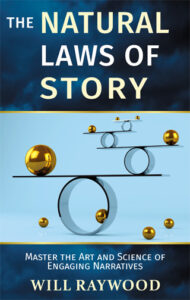
I’m neither a strict plotter nor a pure discovery writer; I developed my own method for building a strong story arc, which I explain in detail in a recently published writing guide: The Natural Laws of Story. Check it out!
Have you tried Stephen King’s routine? I’d love to hear your thoughts. Leave a comment below!