Will Raywood, author

  • Home
  • Books
    • Jamie Genius Writes a Novel
    • Trust Your Story
    • Natural Laws of Story
    • Extras
    • Free e-book
  • Newsletter
  • Blog
  • My Story
  • About
  • Privacy Policy

This Report Is Terrifying… How to Protect Your Writing Career?

9 July 2026 by willraywood.com Leave a Comment

Imagine a world where every new release is just AI slop. Human authors? Gone.

Books, movies, TV shows, videogames… everything starts to blur into the same formulaic, artificial stories. And the problem goes far beyond publishing. In fantasy alone, the most influential franchises—The Lord of the Rings, Game of Thrones, The Witcher—all began as books. Now imagine a future where bold new worlds and mind‑bending ideas simply… stop appearing.

Dystopian, isn’t it? Yet I don’t believe this future is inevitable. In fact, paradoxically, I think it’s still a great time to start a writing career.

Because in the age of AI, being a skilled storyteller matters more than ever.

If you’re raising an eyebrow, I get it. But hear me out. The Independent Society of Musicians recently released a report that should terrify anyone working in creative industries. It certainly shook me. The report describes, and I quote,

the greatest acts of theft in modern history: the stripping of the UK’s creative industries of their rights, livelihoods, and control over their work.

And the problem is global, not confined to the UK. The survey behind the report gathered responses from five major organizations representing more than 80,000 creators, including authors, illustrators, and musicians. To grasp the scale: the creative sector supports over 2.4 million jobs in the UK alone. Across every discipline, the message is the same: Gen‑AI is pushing creative livelihoods to the brink.

The Creative Sector in Crisis: What the Brave New World Report Reveals

Let’s talk specifically about writers. More than a thousand members of the Society of Authors responded to the survey. A staggering 86% say Gen‑AI has already reduced their earnings, and 65% expect their income to fall even further. 72% report that job opportunities have already been cut, and an alarming 57% say their career is no longer sustainable.

The report also highlights a shocking case of literary identity theft. Bestselling author Vanessa Fox O’Loughlin (better known as Sam Blake) discovered that someone had published AI‑generated books on Amazon under her pen name, complete with covers and typography designed to mimic her real titles. Imagine her shock when these fakes appeared on her verified author page and were automatically pushed to her followers as new releases.

According to O’Loughlin, the fraudster used Gen‑AI to imitate her style. On her blog, she writes:

I was hoping that the fake books could be marked as AI content or (this is definitely wishful thinking) taken down. But they don’t contravene Amazon guidelines, and perhaps there is someone else out there who is called Sam Blake who writes dark romantasy, ably assisted by ChatGPT, Grok, or Deep Seek.

I couldn’t find the books on Amazon or Goodreads, so they were likely removed. But the incident shows just how far scammers will go to sell AI‑generated slop… and how exposed both authors and readers are to this kind of deception.

AI Influencers and Fake Engagement: A New Wave of Digital Deception

And it gets even stranger. A YouTuber recently uncovered a wave of AI‑generated influencers on social media, fake avatars recommending obscure indie books, boosted by hundreds of comments and upvotes from other fake accounts. Some scammers even approach authors directly, offering these “promotional services.”

So now we have AI‑generated books, promoted by AI‑generated influencers, amplified by AI‑generated engagement. It feels like we’re sprinting toward a Philip K. Dick‑style dystopia where no one can tell what’s real and what’s manufactured.

Why AI Cannot Replace Human Expertise

Alas, fraud and impersonation are only one piece of a much larger crisis. Royalty income for traditionally published authors has been sliding for years, especially in nonfiction and several fiction genres. I’ve seen it with my own nonfiction books; sales dropped noticeably after the release of ChatGPT. More and more people now rely on chatbots for information, and that trend should worry all of us.

Chatbots and the internet are no substitutes for books written by experts. They’re great for quick answers, but they can’t give you the depth of understanding you need to truly master a subject. Both AI and online content tend to reinforce mainstream views, while books offer original perspectives shaped by years of lived experience and research.

If you’re trying to build a writing career solely on free online advice, I have bad news: you’re setting yourself up to fail. And if that’s the case, don’t blame AI. Much of the advice floating around the web is outdated, shallow, or outright misleading.


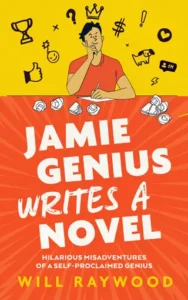
If you’d like to support my work and see more articles like this, check out my books, for example the story about a disastrously misguided debut novelist.

Come for the comedy, stay for the cautionary tale!


Challenges and Opportunities for Authors

All of this sounds bleak for authors. Is it game over for the writing profession? I don’t think so. What we’re experiencing is painful, yes, but I believe it’s also transitional, a turbulent moment of change that brings both challenges and opportunities.

So what are the solutions? The report argues that the core problem is companies scraping creators’ work and identities without permission. Their proposed answer is the CLEAR framework, which would require companies to compensate creators when training AI models on copyrighted content. The idea is to build a market where people are paid for the material AI learns from, with the option to opt out. It would also protect creators’ identities by preventing voice and style mimicry.

Will it work? I’m skeptical. The damage to the creative industries is so severe that licensing alone may not be enough to repair it.

Mandatory labeling of AI‑generated books sounds promising, but enforcing it would be nearly impossible. AI detectors are notoriously unreliable and could harm writers who use AI responsibly… or don’t use it at all.

If we can’t force platforms to label AI‑generated books, could we flip the idea and label human‑authored ones instead?

The Authors Guild has introduced a “Human Authored” certification, confirming that

the text of the book was written by a human and not generated by AI, with the exception of minimal uses such as AI applications that check spelling and grammar or for brainstorming or research.

It’s a clever idea, but far from foolproof. The certification verifies the creator’s identity, not the purity of the process. It’s only a matter of time before a scandal exposes its limitations.

No, I don’t believe AI detectors or book labeling will save us or protect author’s income. The real solution won’t come from regulators or publishing platforms. It will come from the community itself, from authors and readers. AI can generate books, but it cannot build communities or forge genuine human connections.

That’s how we survive the AI onslaught. That’s how we fight back. That’s how we thrive in this strange new world of scammers and fakes.

Wishful thinking? I don’t think so. Even before AI, the only reliable path to a sustainable writing career was building a loyal readership. That’s how fiction authors endure.

So what can you do right now to secure your future as an author? Start with a fundamental mindset shift—from writer to storyteller, and from content creator to community builder. Yes, AI is reshaping writing jobs, but skilled storytellers will always be in demand, because the human mind will always crave emotional connection.

Storytelling is the last bastion of human creativity, because at its heart lies the art of emotional exchange.

New Tools for a New Era: Crowdfunding, Subscriptions, and Reader Support

If you dream of turning creative writing into a full‑time job, here’s my advice: don’t rely on royalties alone. Book sales are unpredictable, they always have been. In her book The Business of Being a Writer, Jane Friedman shares revealing figures showing that royalties make up only a small percentage of her annual income. That’s normal. It’s true for me as well and for many successful writers I know.

The good news is that authors have never had more tools to build a community around their work and monetize it. Crowdfunding and subscription models are just two examples of income streams that can complement royalties.

Look at fantasy author Brandon Sanderson, who raised a record‑breaking $41.7 million on Kickstarter for four new books. Readers pledged hundreds of dollars in a single campaign. Many authors use crowdfunding to cover editing, cover design, formatting, even research trips. You don’t need millions to make your dream possible, but you do need a community of readers willing to support you.

Mailing lists and subscription platforms are another powerful tool. Andy Weir, author of The Martian, began by posting serialized fiction on his website and built a following of about three thousand readers. That core audience was the engine behind The Martian’s early success on Amazon.

Weir is a great example because his book took off with almost no self‑promotion. He didn’t spam social media, a habit far too common among writers today. The truth is, blatant self‑promotion doesn’t work. But when you have a loyal, enthusiastic following, your readers will promote your work for you.

Today, writers have access to platforms that make it easier than ever to share content, grow a mailing list, and even monetize serialized fiction through subscriptions. Substack is one such platform, attracting high‑profile authors like Salman Rushdie and Margaret Atwood.

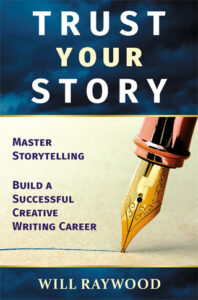
Book cover: Trust Your Story: Master Storytelling and Build a Successful Creative Writing Career by Will Raywood

How to Build Your Own Community

Building a following may feel daunting, but the prerequisite is simple: you must be part of the community you hope to reach. If you haven’t started yet, follow this plan. First, define your target audience as precisely as possible. Second, find the places where your future readers gather to talk about books: online groups, forums, Discord servers, or local book clubs. Third, become an active member of that community, not to self‑promote, but to understand them. What are their interests? Their tastes? Their values?

That knowledge is essential. In my guide Trust Your Story, I present the pyramid of creative success. Writing style sits at the top—it’s the icing on the cake. At the foundation are the two pillars of lasting success: mastery of storytelling and a deep understanding of your audience. But that’s a topic for another blog post.

So, how do you feel about the future of our profession? I’d love to hear your thoughts. Share them in the comments.

Filed Under: Blog Tagged With: AI‑generated books, authors vs AI, generative AI, writing career

Forget AI: Stephen King’s routine is what you need to write a novel fast

11 June 2026 by willraywood.com 1 Comment

It took me three years to write my first novel, and it wasn’t even good. Then I tried Stephen King’s famously productive routine, and it changed everything. King has written more than 60 novels and novellas, plus over 200 short stories. While most published authors write one book a year, he writes a full novel in about three months.

What’s his secret? I followed the advice he outlines in On Writing: A Memoir of the Craft, and what I discovered may surprise you. Here’s my four-step plan to finish a novel in under three months.

Step One: Start With a Strong Premise

First, you need an idea for your book. The good news is that you don’t need a fully formed story to start writing. King begins with a situation. He asks, “What if?” What if a high school girl had telekinetic powers? (Carrie). What if a writer were held captive by his “number one fan”? (Misery).

When it comes to the writing process, there are two broad types of writers: plotters and discovery writers, also known as pantsers. Plotters develop a detailed plan before drafting. They know their characters’ backstories, goals, and secrets, and they understand how the story will unfold and resolve.

King belongs to the discovery writers. He doesn’t plan his stories in detail. Instead, he trusts his instincts and improvises as events unfold, following the story wherever it leads. He writes,

Plot is […] the good writer’s last resort and the dullard’s first choice.

Many debut writers feel stuck because they believe they need a groundbreaking idea, an original theme, and a detailed outline before they can even begin. King argues the opposite. Clarity comes during the writing process, not before it. For him, writing isn’t the reward for having a good idea; it’s the method by which good ideas are discovered.

Even if you’re a plotter, you can still use King’s routine. In fact, plotters can often write novels even faster than three months. I’ve done it myself, no AI needed, but that’s a topic for another video.

Step Two: Learn to Write Well… and Fast

Once you have a story idea, the next stage is the most important one: write the first draft without interruption.

King writes six pages every day, roughly 2000 words. That may sound like a lot, but it’s entirely doable, even with a full-time job and a busy family life. You need two things: the ability to write fast and a routine you can sustain for several weeks.

Some writers believe that writing fast means sacrificing quality. In fiction, the opposite is often true. Writing quickly can produce prose that feels more spontaneous and alive. Many famous works were written in bursts of creative energy. Robert Louis Stevenson wrote The Strange Case of Dr. Jekyll and Mr. Hyde in just a few days. Ray Bradbury wrote Fahrenheit 451 in nine days. Stephen King himself drafted The Running Man in a single week.

The surprising part is that anyone can learn to write faster. When I started, I struggled to write 200 words an hour. With practice, that number steadily increased. Many writers produce 500 to 1000 words an hour, and with certain techniques, even more. If you can write 1000 words an hour, you only need a couple of hours a day to hit that six-page goal.

One powerful technique is freewriting, which has been around for almost a century and used by many great writers. Try this: choose a topic you care about and write as fast as you can for two minutes without stopping. Don’t worry about grammar or sentence structure. Don’t analyze. Just keep writing whatever comes to mind.

You may be surprised to discover that your true feelings about the topic differ from what you thought. Freewriting bypasses the conscious mind and reveals deeper truths beneath the surface. This is a key part of discovery writing.

Writing fast can feel incredibly liberating. Don’t worry if the results are rough or even nonsensical. You’ll revise them later, in step four. During drafting, your only goal is to give voice to your characters and explore their deepest fears, desires, and anxieties.

Step Three: Build a Daily Writing Routine

The next step is to create a routine that allows you to write every day without interruptions. King writes in a kind of self-hypnosis, what psychologists call a flow state, where the outside world fades away and you’re fully immersed in the work.

To reach that state, you need a dedicated workspace where you won’t be disturbed. Turn everything off: your phone, email notifications, TV, everything. Clear your desk of distractions, keeping only some water or your favorite drink. King writes with the door closed to shut out the world.

Once you start, don’t stop unless there’s an emergency. If you get stuck on a scene, leave a placeholder and keep writing.

Sound matters, too. King often listens to music while writing or revising. Whether you write with music or in silence is up to you, but if you do use music, make sure it matches the mood of your story. King prefers energetic rock and metal, which suit his style and pace.

The time of day also matters. Set a non-negotiable writing slot. King writes from 8 a.m. to noon, but other authors choose times that fit their lives. Toni Morrison woke at 4 a.m. to write while raising two children. I’ve known writers who worked from 5 to 7 every morning without fail. Night owls may prefer late evenings; writers like Marcel Proust and Franz Kafka worked through the night.

In short, a full-time job, family responsibilities, and a social life are not insurmountable obstacles for motivated writers. If you write at least 1000 words a day, finishing the first draft in three months is entirely realistic.


Ever wondered how some bestselling authors write a full novel in less than a month? Yes, just one month, from the first spark of an idea to a publishable manuscript. It’s not talent or luck.

Subscribe for my newsletter to learn the exact techniques and receive a free e-book as a welcome gift.


Step Four: Revise Your Manuscript

Congratulations! You’ve written the final sentence of the last chapter. But the journey isn’t over yet. King recommends taking a six-week break before revising, though for some writers a week or two is enough. Distance helps you return to the manuscript with fresh eyes.

Like many writers, I used to dread revisions. Now I enjoy them. This is where you turn a rough diamond into something that shines… or at least something you’re not embarrassed to share.

When revising, ask yourself what the story is really about. What’s the core emotion beneath the surface? In Carrie, it’s humiliation and rage born from bullying. In Misery, it’s the fear of losing creative freedom. In It, it’s the childhood trauma we carry into adulthood.

Do you see a theme or a common thread emerging? Does your manuscript truly serve it? Cut anything that distracts from the story, including unnecessary characters, long exposition, and even entire subplots. This is where King’s advice “kill your darlings” comes in. For him, the final manuscript is the first draft minus ten percent.

He recommends multiple self-editing passes, each focused on a specific aspect such as structure, character, or style. First drafts are supposed to be messy. Rewrite awkward sentences. Keep descriptions tight. As King puts it,

Description begins in the writer’s imagination, but should finish in the reader’s.

Here’s a passage from Doctor Sleep:

Danny left the little room next to his mother’s and crossed the hall. The wind gusted and a dying palm tree beside the building clattered its leaves. The sound was skeletal.

Notice how he uses precise but minimal details. Words like “dying” and “skeletal” deliver emotional impact and set the mood. King is skeptical of adverbs, saying that “the road to hell is paved with adverbs.” He wouldn’t write “the wind gusted sharply,” because “sharply” adds nothing. He wouldn’t write “the boy walked quickly,” but instead chose verbs like hurried, trotted, or darted—more concrete and visual choices.

He also favors active voice. “John gave a rose to Jane” feels more natural than “Jane was given a rose by John,” because we first see the action, then its recipient.

These aren’t rigid rules. Adverbs and passive voice can be effective when used deliberately. Whatever makes your writing more concise and vivid also makes it more engaging.

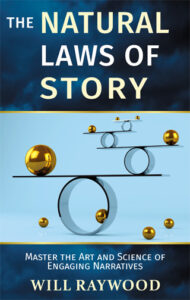
Book cover: The Natural Laws of Story: Master the Art and Science of Engaging Narratives by Will Raywood

My Own Method for Building Strong Story Arcs: The 4Ps Method

If you follow King’s advice closely, you’ll draft your novel in under three months, take a six-week break, and spend another six weeks revising. I managed to complete my manuscript from start to finish in less than three months.

I’m neither a strict plotter nor a pure discovery writer; I developed my own method for building a strong story arc, which I explain in detail in a recently published writing guide: The Natural Laws of Story. Check it out!

Have you tried Stephen King’s routine? I’d love to hear your thoughts. Leave a comment below!

Filed Under: Blog Tagged With: creative writing advice, discovery writing, first draft tips, how to revise a novel, how to write a novel fast, plotters vs pantsers, Stephen King, story ideas, writing career, writing productivity, writing routine

The AI Trap That Can Kill Your Writing Career

26 April 2026 by willraywood.com Leave a Comment

More than half of the UK’s published novelists believe AI is coming for their jobs, a recent Cambridge study reports. At the same time, a new breed of “writer” brags they can produce a whole book in under an hour.

In a now-infamous New York Times article, “The New Fabio is Claude,” a writer named Coral Hart claimed to have self-published over 200 romance novels in a single year using AI. Specifically, Anthropic’s Claude; yes, the same company authors sued for training its models on pirated books.

Dystopian, isn’t it? She allegedly sold 50,000 copies and earned a six-figure income. The pitch is a masterclass in hustle-culture logic:

If I can generate a book in a day, and you need six months to write a book, who’s going to win the race?

A compelling argument, isn’t it? Because as we all know, success in creative writing is a numbers game. Forget compelling stories. Forget a unique voice. Forget emotional resonance. It’s all about quantity, baby. Just churn it out.

But wait, it gets better.

Coral Hart, entrepreneur extraordinaire, launched a company to teach other aspiring authors her methods. I visited her website and stumbled upon a service so brazen it made me laugh out loud: “Done-for-You Romance.”

Skip the blank page and jump straight into editing. Each Skip-the-Draft package gives you a fully drafted romance manuscript — professionally plotted, written, and ready for your personal touch. Perfect for authors who want to publish faster without starting from scratch.

Whoa. I’m no lawyer, but after years in the publishing trenches, I can tell you this: you can’t copyright a book generated by AI, even with “your personal touch.” Gen-AI output is public domain. Period. This isn’t writing; it’s the digital equivalent of copying Pride and Prejudice, changing a few character names, and slapping your own on the cover.

So, this brings us to the million-dollar question: does this stuff actually sell, and is the risk worth the reward?

Let me be blunt. Using AI to generate novels is the worst decision a writer can make. I’m going to show you precisely why. And if, after reading this, you still want to do it, please do me one favor:

Don’t invite me to the funeral of your writing career.


The Siren Song of the Shortcut

Can you produce an entire novel with generative AI? Yes. Could it be commercially viable? Maybe, if you have a considerable marketing budget.

Look, I’m not anti-AI. I embrace new technology. I was an AI enthusiast myself, and I get the appeal. You have a story burning inside you, but the blank screen can be terrifying. Then, a video flashes across your screen, a snake-oil salesman promising you can write a novel in a single day. It’s an intoxicating promise: bypass the fear, the doubt, the months of agonizing work, and leap straight to the finish line.

But that shortcut comes at a cost that will gut your career before it even begins.


Gold, Gravel, and Brandon Sanderson

Let’s talk economics 101: the scarcity principle. People pay more for things that are valuable and rare. When something is scarce, it’s meaningful. When it’s abundant, it’s disposable. Gold is more valuable than gravel because it’s hard to obtain. Any gold miner or bank robber can tell you that.

Books are no exception.

Fantasy author Brandon Sanderson raised a record-breaking $41.7 million on Kickstarter for four new books. Readers pledged hundreds for a single campaign. Why? Are there not enough fantasy books already?

They pledged that money because they weren’t buying any fantasy book; they were paying for a Sanderson book. They wanted to live in the worlds he created, through the magic of his unique voice. This holds true for any author with a fanbase: they offer something valuable, rare, and inimitable that their readers crave.

AI-generated books are, by their very nature, generic gravel. They are the opposite of scarce. Anyone can produce them. Readers instinctively recognize derivative, soulless content and won’t spend their hard-earned cash on it. And even if they’re duped into buying one, they won’t become a lifelong fan of the “author.” They’ll just feel ripped off.


A Look at the Evidence

“But what about Coral Hart’s six figures?” you ask.

I went to her Amazon page, and… oh, boy. The reader ratings for her recent, AI-generated books are abysmal. That’s not the profile of a bestselling author. A quick trip to Goodreads painted an even bleaker picture: 243 ratings with an average of 1.26 stars.

Trust me, after years in this business: you cannot build a sustainable career with reviews that look like a crime scene.

Curious, I dug deeper. I looked up her other pen names, like Ashleigh Giannoccaro. The picture here is starkly different. The books she published years ago, before generative AI, were much better received. She was already a prolific writer, publishing several books a year the old-fashioned way. My assumption, she had an established career and a following before she switched to the AI firehose.

How did outsourcing their creativity to a machine work out for other AI writers? Here is a representative excerpt from a review for an AI-generated book:

…this book is AI generated. It just lacks any trace of substance or emotional depth that a human author would bring to a story. It just felt like nothing. Merely words on a page.

Merely words on a page. Is that what you got into writing for?


There Is a Better Way

Here’s the secret the AI hustlers won’t tell you: you don’t need AI to write fast and well. You don’t need it to publish multiple novels a year and earn a six-figure income. Stephen King writes a book in under three months. Prolific indie authors were crushing it long before ChatGPT.

Ever wondered how some bestselling authors write a full novel in less than a month? Yes—just one month, from the first spark of an idea to a publishable manuscript. It’s not talent or luck.

Subscribe for my newsletter to learn the exact techniques and receive a free e-book as a welcome gift!


Newsletter

You shouldn’t be asking, “Why should I learn to write when AI can generate a book in an hour?”

Ask, “How do I build a writing career that lasts longer than a TikTok trend?”

Even if AI can generate a book, it cannot generate a career.


Legal Risks of AI-Generated Books

Still tempted? Let’s talk about the legal risks.

For traditional authors: Publishers require that your work is original. AI-generated text is legally not considered original work and cannot be copyrighted. If they discover you’ve used it, they can sue you for breach of contract. You’ll lose your advance, your reputation, and any chance of working with a publisher again.

For indie authors: The risks are just as real. Platforms like Amazon KDP require disclosure of AI-generated content. Failing to do so is a violation of their terms of service. Also, using AI opens you up to copyright, trademark, and unfair-competition lawsuits. Even unintentional copying can get you in hot water.

The penalty? Account termination. And when KDP terminates your account, you aren’t suspended. You are banned. For life. You can’t open another one. Your self-publishing career is dead, burned, and its ashes scattered by the wind.


The Soul of the Matter

What bothers me most in this entire circus is the insidious idea that drafting a novel—the act of creation itself—is a chore. An unpleasant task to be outsourced.

If you’re an author, a true author, then the act of breathing life into characters and building worlds from scratch isn’t a chore; it’s the entire point. It should be a joy. A struggle, yes, but a deeply fulfilling one.

Storytelling has never been just about plot points. At its core, it’s the art of emotional exchange. The most enduring stories are vessels for their author’s unique insight, pain, wonder, and life experience.

Can AI be creative? Why not? After all, even a parrot can talk. AI simulates creativity. But there is a universe of difference between creativity and artistic vision. An artistic vision stems from purpose, from the human need to communicate something specific: an idea, a lived experience, a raw emotion.

AI has no artistic vision because it has not lived a human life. It has no scars, no heartbreaks, no triumphs. It cannot draw from the well of personal experience that makes art resonate.

I’m not anti-AI. I’m anti-mediocrity.

And I’m for you, the writer. The one who respects the craft and the reader. The one who knows that the magic is in telling a story only you can tell, not in generating AI slop.

Here is a passage from my guide, Trust Your Story:

The most impactful stories are authentic. They stem from genuine human experiences, not from mechanical adherence to formulas and plot templates. Don’t settle for mediocrity; aim for authenticity.

Some creators worry that advances in generative AI technology will make them obsolete.

Should we, as human creators, be concerned? I am not. No matter how advanced AI becomes, it cannot teach you how to be a successful storyteller or write deeply satisfying stories. While AI understands the mechanics of storytelling, it can’t grasp the nuances of human existence. Human-written text may be flawed, but it’s authentic, reflecting the style, character, emotions, voice, and lived experiences of a real person. For me, authenticity trumps stylistic perfection.

Trust Your Story

Now, what are your thoughts? I’m curious to hear your experiences and perspective. Leave a comment below.

Filed Under: Blog Tagged With: AI in publishing, AI writing, AI‑generated books, Amazon KDP, authors vs AI, Coral Hart, creative writing advice, emotional storytelling, generative AI, publishing industry news, self‑publishing, writing career, writing craft

FOLLOW ME

Newsletter | Goodreads | YouTube

Copyright Will Raywood, 2025

Copyright © 2026 · Agency Pro on Genesis Framework · WordPress · Log in